Sea Swimming for Beginners: How to Start Safely
The short answer: The safest way to start sea swimming in the UK is at an RNLI-lifeguarded beach, between the red and yellow flags, with someone else, in calm summer conditions you can handle. Check the tide times before you leave home, wade in slowly to take the edge off cold water shock, and if you are ever caught in a rip current do not swim against it: Float to Live, then swim parallel to the beach or signal for help.
The sea is not a big lake. Tides, currents, waves and wind change the water hour by hour, and the same beach can be gentle at ten in the morning and genuinely dangerous by mid-afternoon. That is not a reason to stay on the sand - it is a reason to learn a handful of rules before your first swim. This guide is grounded in advice from the RNLI and the Outdoor Swimming Society, and none of it implies the sea is ever completely safe. It is not. Respect it and it will give you a lot back.
Sea swimming for beginners at a glance
| Question | Answer |
|---|---|
| How do I start safely? | Swim at an RNLI-lifeguarded beach, between the red and yellow flags, never alone - and always check tide times first |
| Best time for a first swim | Late summer (the UK sea is warmest around August-September), on a calm day, during lifeguard patrol hours |
| Biggest dangers | Rip currents, cold water shock, tides and waves - not sharks or sea monsters |
| If caught in a rip | Do not swim against it. Float to Live, then swim parallel to the shore or raise a hand and shout for help |
| Essential kit | Bright swim cap and a tow float for visibility; warm layers for afterwards |
| Golden rule | Never swim alone, and always tell someone where you are going and when you will be back |

Why should beginners start at a lifeguarded beach?
Because someone trained is watching the water for exactly the hazards you cannot yet read. RNLI lifeguards patrol beaches around the UK coast in season, assess the conditions each day, and mark out the safest area for swimming with flags - and if something goes wrong, help is minutes away.
The RNLI's core advice for anyone entering the sea is simple: choose a lifeguarded beach and swim between the red and yellow flags - the safest part of that beach, on that day, in those conditions. Patrol dates and hours vary by beach and season, so check the RNLI's beach finder before you travel.
What do the beach flags mean?
| Flag | Meaning |
|---|---|
| Red and yellow flags | Lifeguarded area. The safest place to swim and bodyboard. Stay between them. |
| Black and white chequered flags | Zone for surfboards, kayaks and other craft. Never swim here. |
| Red flag | Danger. Do not enter the water, however tempting it looks. |
| Orange windsock | Strong offshore winds. Never use inflatables - they blow out to sea fast. |
No flags flying?
No flags usually means no lifeguard on duty - nobody has assessed the water today, and nobody is watching. As a beginner, treat an unpatrolled beach as a reason to pick a different beach or a different day.
What should you check before you go?
Five minutes on your phone the night before does more for your safety than any piece of kit. Run this checklist every single time - it is quick, and it becomes automatic.
| Check | What you are looking for | Where to look |
|---|---|---|
| Tide times | When high and low tide fall, so you know what the beach will be doing while you swim | Met Office or BBC tide tables for your nearest port |
| Wind | Strength and direction - offshore wind (blowing from land to sea) flattens the water but pushes floating swimmers out | Met Office coastal forecast |
| Waves and swell | Small and clean for beginners; big or messy surf is a no | Surf forecast sites, beach webcams, your own eyes on arrival |
| Water quality | Bathing water classification and any pollution alerts, especially after heavy rain | EA Swimfo (England), SEPA (Scotland), our map |
| Lifeguard cover | Is the beach patrolled, and between what hours? | rnli.org lifeguarded beach finder |
| Your plan | Who is swimming with you, where you will get in and out, and who on land knows your plan and return time | You |
How do tides work, and why do sea swimmers check them?
Around most of the UK coast the tide comes in and goes out twice a day, with roughly six and a quarter hours between high and low water. That constant movement matters to a swimmer in three ways.
- The beach changes shape. Low tide can expose rocks, gullies and sandbars; at high tide your easy entry point may be under water. The spot you walked into an hour ago may not be the spot you can walk out of.
- Water moves fastest mid-tide. Tidal streams are generally strongest in the middle hours between high and low water - a current you barely noticed at slack water can be hard work two hours later.
- Tidal cut-off is real. A rising tide can cut off coves, headlands and causeways, and it is a regular cause of RNLI and Coastguard call-outs - for locals as well as visitors.
If you do not know how a beach behaves through the tide, ask the lifeguards - they would far rather answer questions than launch a rescue. Give extra respect to anywhere water is funnelled - estuaries and river mouths, harbour walls, piers and groynes - where currents can be far stronger than they look. When in doubt, stay well within your depth.
What is a rip current and how do you spot one?
A rip current is a narrow channel of water flowing back out to sea, formed as the water pushed in by breaking waves finds a route back out - often through a deeper gap between sandbars, or alongside groynes, piers and rocks. Rips are a major cause of RNLI lifeguard rescues, and the RNLI warns that a strong rip can flow faster than an Olympic swimmer. You will not out-swim one.
Here is the sentence to remember: a rip current pulls you out, not under. It is a conveyor belt, not a whirlpool. People get into trouble not because the rip drowns them, but because they exhaust themselves fighting it.
From the beach, look for:
- A channel of darker, calmer-looking water between areas of breaking waves - deceptively, the "flat bit" is often the rip
- Rippled, churned or discoloured water and sandy clouds moving seaward
- Foam, seaweed or debris travelling steadily away from the beach
Rips are hard to spot even for experienced swimmers - one more reason to stay between the red and yellow flags, where lifeguards have already steered you away from the day's rips.
What should you do if you are caught in a rip?
- Do not fight it. Swimming against a rip exhausts you, and exhaustion turns a scare into an emergency.
- If you can stand, wade - do not swim.
- If you can swim, go parallel to the beach, towards the breaking waves, until you are out of the channel - then let the waves help you in.
- If you cannot, float. Lean back, keep your airway clear and let the rip carry you - rips generally weaken beyond the breaking waves. Raise a hand and shout for help.
Float to Live: the skill to learn before you need it
The RNLI's Float to Live technique is the single most important thing on this page. In trouble in the water - a rip, cold water shock, panic out of your depth - do this:
- Tilt your head back, ears submerged, face clear of the water
- Relax and breathe, letting your legs rise - gently scull with your hands if you need to
- Float for 60-90 seconds until the panic or the cold shock passes and your breathing settles
- Then act: call for help, or swim to safety only once you are calm and in control
If you see someone else in trouble
Do not go in after them. Call 999 and ask for the Coastguard, shout "FLOAT ON YOUR BACK", and throw them something that floats. Would-be rescuers who enter the water regularly become casualties themselves.
How do you handle waves and shore dump?
Waves are most dangerous exactly where beginners meet them: in the shallows. On steeply shelving beaches, waves can rear up and break directly onto the sand in a single heavy crash - this is shore dump (or shore break), and it can knock an adult off their feet and drive you into the seabed.
- Never turn your back on the sea while you are in the impact zone.
- Time your entry and exit between sets of waves; sets arrive in groups with lulls between.
- Go under, not over. Ducking under a breaking wave is often easier than jumping it.
- If the shore dump looks heavy, do not swim. Come back when it is calm.
How cold is the sea in the UK - and what does cold water shock do?
Colder than it looks, for more of the year than you would think. The sea lags a couple of months behind the air: around the UK it is typically warmest in late August and September, coldest in February and March, and even the summer peak usually only reaches the mid-to-high teens Celsius. For most of the year, UK sea swimming is cold water swimming.
Water below about 15C can trigger cold water shock: an involuntary gasp and a minute or more of rapid, uncontrollable breathing, with a spike in heart rate and blood pressure. It is the most dangerous minute of any swim, because a gasp taken underwater is how people drown fast. The defence: enter slowly, wading in and wetting your neck and chest; never dive or jump in; and do not start swimming until your breathing settles. If it overwhelms you, Float to Live - it passes, usually within 60-90 seconds.
Cold water shock, incapacitation and afterdrop are covered properly in our full cold water swimming safety guide - read it before your first out-of-season dip. The short version: keep first swims short, get out while you still feel good, and dress warm fast afterwards.
What kit do you need for your first sea swim?
Very little - and no product on this list makes the sea safe. A wetsuit is not a lifejacket and a tow float is not a rescue device; they buy you warmth, buoyancy and visibility, nothing more. But two cheap items make a real difference to how easily lifeguards, boats and your swim buddy can see you.
| Kit | Why it earns its place |
|---|---|
| Bright swim cap | A head in grey water is nearly invisible; a hi-vis silicone cap fixes that and adds a little warmth |
| Tow float | A bright tow float trails behind you on a waist leash - visibility for others, something to rest a hand on if you tire. Not a lifejacket. |
| Neoprene socks | Neoprene socks take the pain out of shingle and rocky entries, and keep feet working in cold water |
| Warm layers for after | A changing robe or plenty of warm layers, a hat and a flask of something hot beat the post-swim chill (afterdrop) |
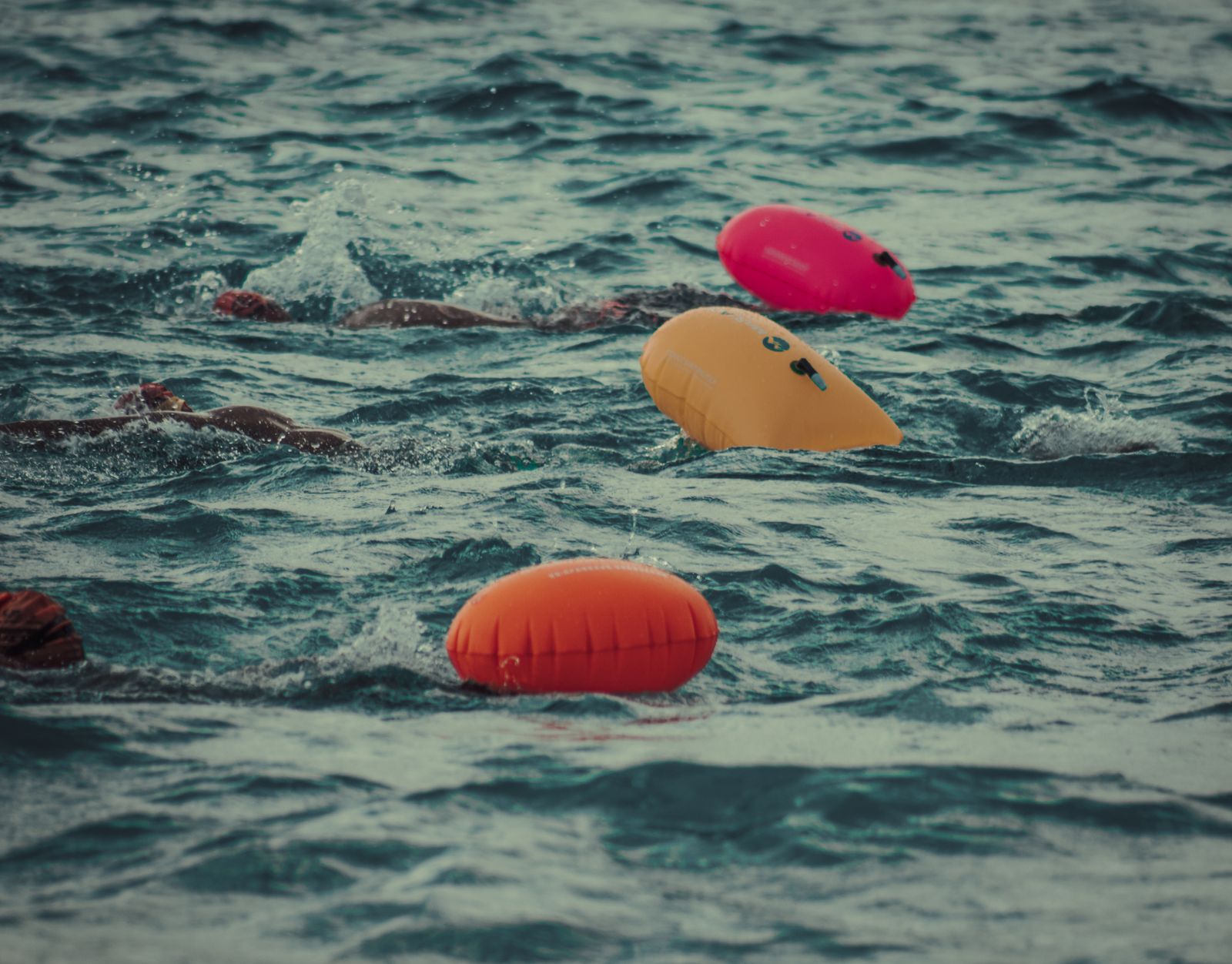
A swimsuit is genuinely fine for short summer dips; if you want to stay in longer or swim outside high summer, see our guides to what to wear wild swimming and the best tow floats in the UK.
What does a safe first sea swim look like, step by step?
Here is the whole plan in one place. Follow it in order and you have covered every major risk on this page.
- The night before: pick an RNLI-lifeguarded beach and check tide times, wind, waves and water quality.
- Recruit company: a friend in the water, or at minimum a friend watching from the beach. Never swim alone.
- Tell someone where you are going and when you will be back.
- On arrival: find the red and yellow flags, and spend five minutes watching the water - waves, other swimmers, anything moving out to sea.
- Ask the lifeguards about rips, the tide and anything local. They answer these questions all day and would far rather brief you than rescue you.
- Lay out your warm kit ready for the moment you get out.
- Get in slowly, between the flags, facing the waves. Wait until your breathing settles before you swim a stroke.
- Stay within your depth, parallel to the shore, close to your buddy. Check your position against a fixed landmark every minute or two - drift is sneaky.
- Keep it short. Ten to fifteen minutes is a triumph of a first swim. Get out while you still feel strong.
- Dress immediately, warm drink in hand, and clock how you feel - that is your baseline for next time.
What are the golden rules for a first sea swim?
- Never swim alone. Go with a friend, join a local sea-swimming group, or swim in the flagged, lifeguarded zone. The RNLI and the Outdoor Swimming Society are united on this one.
- Tell someone where you are swimming and when you will be back - even when swimming with others.
- Check before you travel: tide times, the weather and swell forecast, and lifeguard patrol times.
- Swim parallel to the shore, within your depth, rather than heading out to sea.
- Know your exit before you get in, and check it again as the tide moves.
- Keep first swims short and get out while you still feel strong - cold builds a debt you only notice later.
- In an emergency, call 999 and ask for the Coastguard.
Alcohol and the sea do not mix
Never swim after drinking, and be honest with yourself about tiredness, medical conditions and cold - the sea does not grade on effort.
How do you know if the water is clean enough to swim in?
England's designated coastal bathing waters are monitored by the Environment Agency through the bathing season and classified from Excellent down to Poor; Scotland's are monitored by SEPA and Wales's by Natural Resources Wales. Choosing a designated bathing water means the quality is at least being measured - and after heavy rain, wait a day or two before swimming near river mouths and outfalls, wherever you are.
Our free UK wild swimming map shows hundreds of swimmer-tested coastal and inland spots, with an Environment Agency bathing-water layer for England - use it to find a monitored beach near you. For the full picture on sewage and classifications, read is it safe to swim? UK water quality explained.
Where should you go from here?
The whole guide in four lines
Flags first, feet second. The tide sets the timetable. A rip pulls you out, not under - float, don't fight. And the sea will still be there tomorrow, so if in doubt, don't go out.
Pick a lifeguarded beach on a calm late-summer day, take a friend, a bright cap and a tow float, check the tides the night before, and keep the first one short. When you are ready to explore quieter coves, lakes and rivers, start with our wild swimming for beginners guide and find your next spot on the map.
Frequently asked questions
Do I need a wetsuit to swim in the sea in the UK?
Not for short summer dips - plenty of sea swimmers use just a swimsuit, a bright cap and a tow float. A wetsuit adds warmth and buoyancy for longer swims or anything outside high summer, but it is not a lifejacket and does not make cold water safe. Whatever you wear, enter slowly and let your breathing settle before you swim.
What do the red and yellow flags on a beach mean?
Red and yellow flags mark the lifeguarded swimming and bodyboarding zone - the safest area of the beach that day, chosen and watched by RNLI lifeguards. A plain red flag means danger: do not enter the water at all. Black and white chequered flags mark a watercraft zone where you should never swim.
What should I do if I get caught in a rip current?
Do not swim against it - a strong rip flows faster than an Olympic swimmer. If you can stand, wade; if you can swim, go parallel to the beach towards the breaking waves until you are out of the channel. If you cannot, Float to Live: lean back, let the rip carry you until it weakens, then raise a hand and shout for help.
When is the sea warmest in the UK?
The sea lags the air by roughly two months, so UK sea temperatures usually peak in late August and September and bottom out around February and March. Even at the peak, most UK coasts only reach the mid-to-high teens Celsius. That is why cold water shock matters to sea swimmers all year round.
Is it safe to swim in the sea alone?
No - the RNLI and the Outdoor Swimming Society both advise against swimming alone. Swim with a friend or a local group, or at a lifeguarded beach between the red and yellow flags, and always tell someone where you are going and when you will be back.
Will a tow float keep me safe?
A tow float makes you far more visible and gives you something to hold and rest on, but it is not a lifejacket and will not prevent drowning. Treat it as one layer of safety alongside a lifeguarded beach, a swim buddy, checking conditions and knowing Float to Live.
How do I know if the sea water is clean enough to swim?
Choose a designated bathing water, where quality is monitored by the Environment Agency in England, SEPA in Scotland or Natural Resources Wales in Wales, and classified from Excellent to Poor. After heavy rain, wait a day or two before swimming near river mouths and outfalls. Our free map shows monitored beaches alongside swimmer-tested spots.
This guide is general safety information, not a guarantee of safety - conditions change and no article replaces your judgement on the day. In an emergency at the coast call 999 and ask for the Coastguard. For the authoritative sources, see the RNLI's beach safety and Float to Live pages.
← Find your spot on the free map