Best Tow Floats UK: Swim Buoys & Dry-Bag Floats Compared
The short answer: for most UK wild swimmers the best tow float is a simple inflatable swim buoy such as the Cressi swim buoy — it makes you dramatically easier to spot and gives you something to hold while you catch your breath. If you swim point-to-point, or want your phone, keys and a warm layer with you in the water, buy a dry-bag tow float such as the Zone3 28L swim safety buoy instead. Whichever you choose, know this: a tow float is a visibility aid, not a lifejacket, and it will not prevent drowning.
A tow float (also called a swim buoy or safety buoy) is the single most recognisable piece of wild swimming kit in the UK, and one of the cheapest ways to make yourself easier to see. It is a bright inflatable that trails behind you on a short leash clipped to a waist belt, sitting on the surface while you swim normally.
This guide makes the buying decision simple. There are really only two types worth thinking about — the simple air-filled buoy and the dry-bag float with storage inside — and choosing between them comes down to one question: do you need to carry anything while you swim?
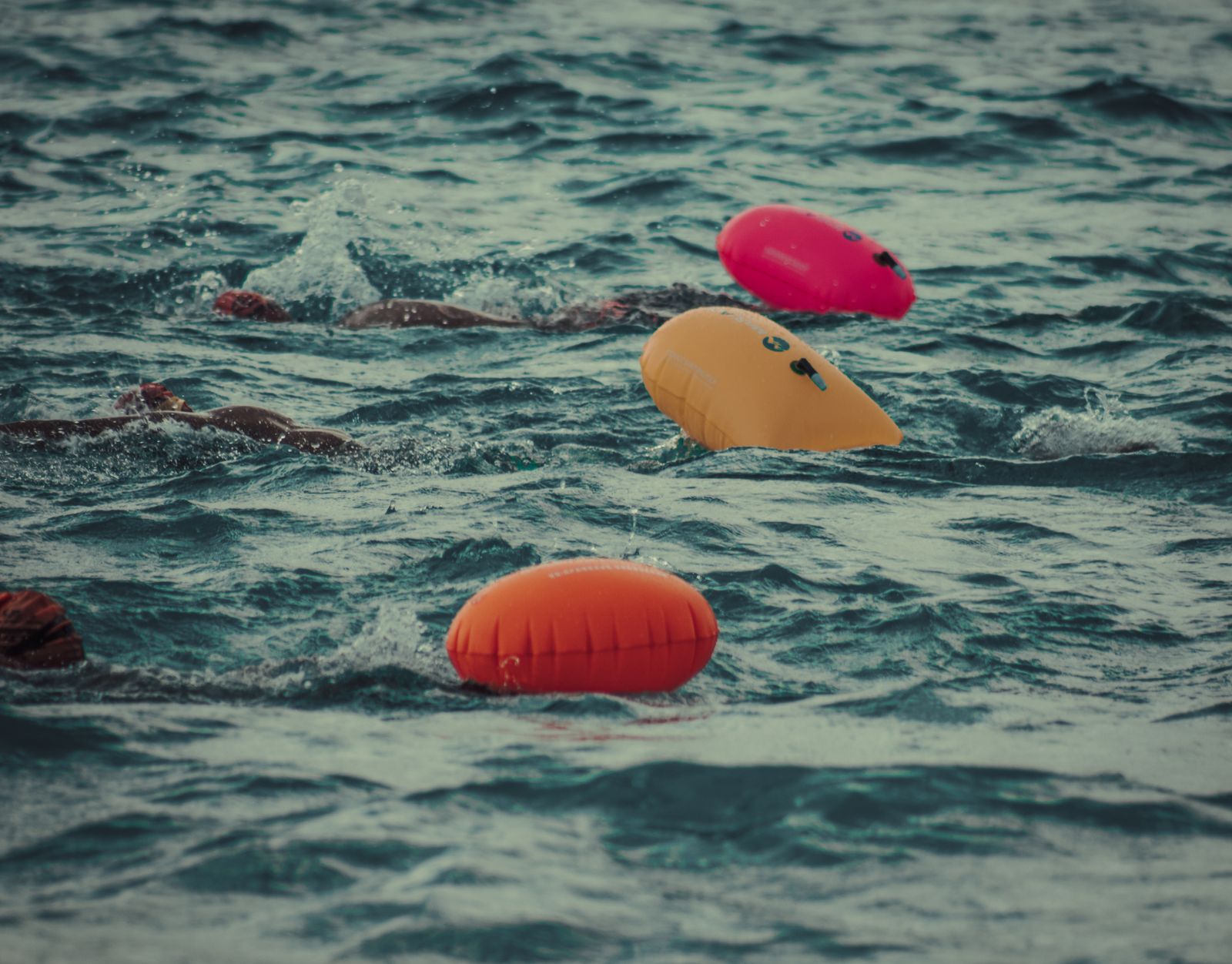
Best tow floats at a glance
| Verdict | Pick | Why |
|---|---|---|
| Best for most swimmers | Cressi swim buoy (simple inflatable) | Light, simple and does the two jobs that matter — visibility and something to rest a hand on — with nothing to go wrong |
| Best if you carry kit | Zone3 28L swim safety buoy (dry-bag float) | Roll-top dry storage inside the float for phone, keys and a layer; made from 100% recycled polyester |
| Pair with | Zone3 hi-vis silicone swim cap | Cap plus float is the standard open-water visibility combination — one marks your head, the other your position |
| What no float does | — | A tow float is not a lifejacket, is not attached to your body in a way that keeps your airway clear, and will not prevent drowning |
What does a tow float actually do?
A tow float earns its place in your kit bag for three honest reasons:
- Visibility. A bright orange or pink buoy on the surface makes you far easier to spot for boats, kayakers, paddleboarders, lifeguards and the people watching from shore. A swimmer's head alone is remarkably hard to see in open water, especially in chop.
- Something to rest on. If you tire, cramp or need a breather, you can hold the float and take the weight off while you settle your breathing. That moment of support is genuinely reassuring mid-swim.
- Carrying kit (dry-bag models only). Floats with a roll-top compartment let you swim with your phone, car keys and a light layer — useful for point-to-point swims and remote spots where you do not want to leave valuables on the bank.
Because the float trails behind you on a leash, it does not get in the way of a normal front crawl or breaststroke. Most swimmers forget it is there within a few minutes.
Here is the phrase worth remembering: a tow float makes you visible, not invincible. It changes how easily other people can see and help you. It does not change what cold water, currents or fatigue can do to you.
What a tow float will NOT do
This is the part every honest buyer's guide has to say plainly. A tow float is not a piece of rescue equipment.
A tow float is not a lifejacket
It is not fastened to your body in a way that keeps your face out of the water, it provides no automatic support if you are unconscious, and it will not prevent drowning. In cold water the killer is often cold water shock in the first minute — if you get into trouble, the RNLI's Float to Live technique (lean back, ears in, relax and breathe) is what buys you time, not your buoy. Treat the float as a visibility aid and a resting aid, never as a reason to swim further, colder or alone.
The Outdoor Swimming Society and the RNLI both frame tow floats the same way: worth using, but no substitute for judgement — swim with others, know your exit, and respect the cold. Our cold water swimming safety guide covers cold shock, swim failure and afterdrop in full.
One more honest caveat: because a tow float sits behind you, it does not stop you drifting, and in strong wind it can even catch a little breeze. It is a marker, not an anchor.
Swim buoy vs dry-bag tow float: what is the difference?
Every tow float on the market is a variation on one of these two designs. Here is the whole decision in one table.
| Simple swim buoy | Dry-bag tow float | |
|---|---|---|
| Our pick | Cressi swim buoy | Zone3 28L swim safety buoy |
| How it works | Fully inflatable — blow it up, clip it on | Inflatable chambers around a roll-top dry compartment |
| Visibility | Excellent | Excellent — and typically bigger, so arguably easier to spot |
| Carries phone/keys/layer | No | Yes — that is the point of it |
| Weight and faff | Lightest and simplest; packs tiny | A little more to inflate, roll and clip each swim |
| Drag in the water | Minimal | Slightly more when loaded, though most swimmers barely notice |
| Price | Usually the cheaper option | Usually costs a bit more — you are paying for the storage |
| Best for | Dips, laps of your local spot, lifeguarded venues | Point-to-point swims, remote spots, swim-hike adventures |
That is genuinely the whole choice. If you always swim loops from the same bit of bank and someone is minding your bag, buy the simple buoy and spend the difference on a decent changing robe. If you have ever stood on a shoreline wondering where to hide your car key, buy the dry-bag float.
Which tow float should I buy?
Best for most swimmers: the simple swim buoy
The Cressi swim buoy is our pick of the simple inflatables. Cressi is a long-established diving and watersports brand, and this is the classic design: a bright inflatable that clips to a waist leash and follows you around all swim, every swim.
Buy this if
You mostly swim dips and loops at a regular spot, your valuables stay on the bank or with a friend, and you want the lightest, simplest, cheapest way to be visible in open water. For nine out of ten wild swimmers reading this, this is the right answer — buy it, clip it on, stop thinking about it.
Best if you carry kit: the dry-bag tow float
The Zone3 28L swim safety buoy is the dry-bag float we would buy. Zone3 is one of the biggest names in British open-water swimming, and this float pairs a 28-litre roll-top storage space with the usual high-visibility inflatable design — it is also made from 100% recycled polyester, which is a genuinely nice touch in a category full of throwaway PVC.
28 litres is roomy: phone, keys, wallet, a packed-down windproof layer and a snack all go in with space to spare. Roll the top down properly — at least three tight folds — before you clip it shut.
Buy this if
You swim point-to-point (down a river, across a bay, along a coastline), you swim at remote spots where nothing can be left behind, or you simply want your phone with you for safety. One honest caveat: treat any dry-bag float's storage as splash-proof rather than guaranteed submersion-proof, and put your phone in a waterproof phone pouch inside it. Belt and braces costs almost nothing; a drowned phone does not.
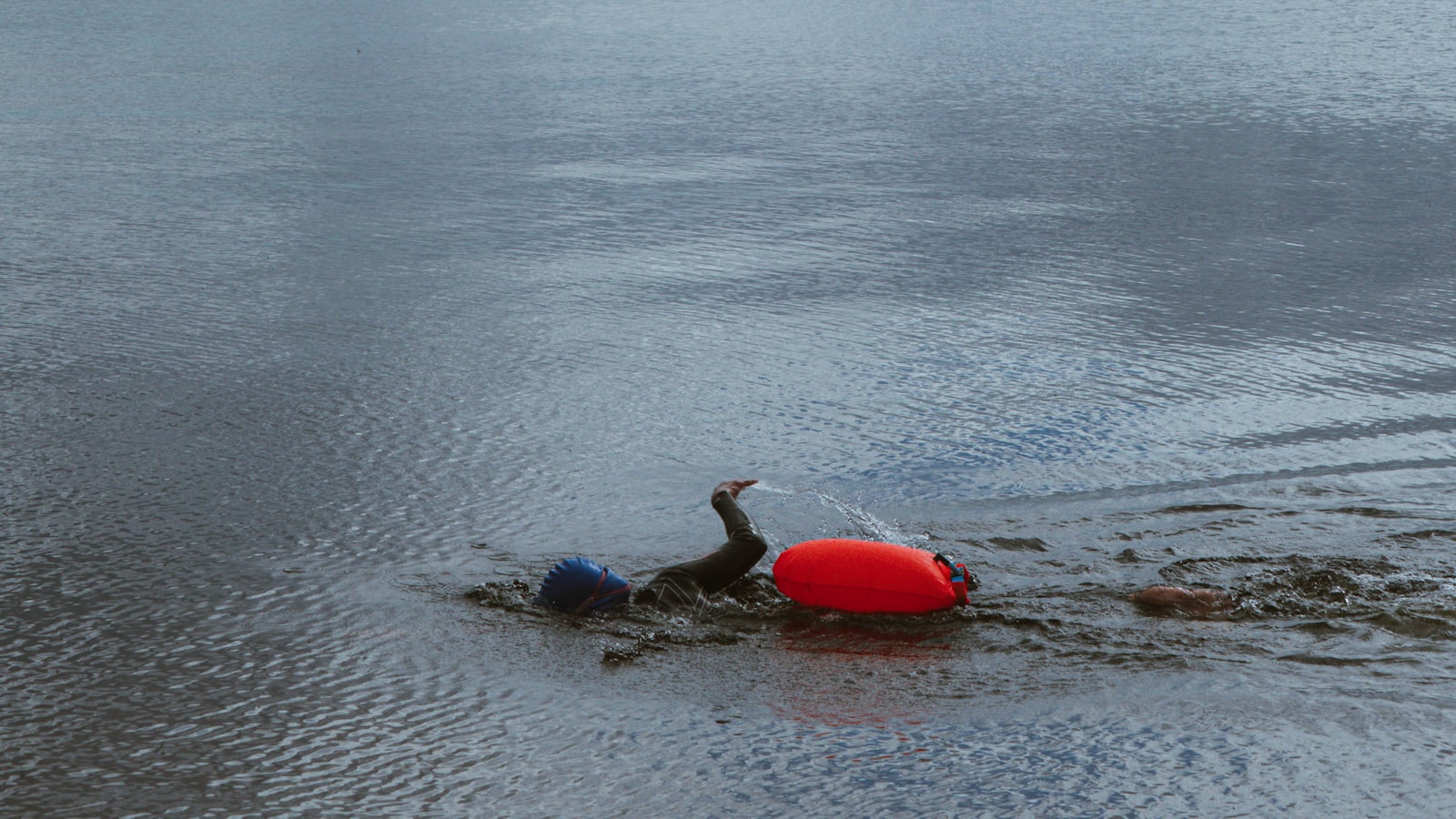
How do you attach and use a tow float?
Setting up takes under a minute once you have done it twice:
- Inflate the float by mouth until it is firm but not drum-tight. A slightly softer float rides bumps and chop better, and air expands in warm sun, so leave a little give.
- If it is a dry-bag model, pack it first: valuables in, roll the top down at least three times, clip, then inflate the air chambers.
- Fasten the waist belt snugly over your costume or wetsuit — snug enough that it cannot slide down when you push off.
- Clip the leash to the belt so the float trails behind you. Most swimmers find it naturally sits behind their hips, out of the way of their kick.
- Check it before every swim: valve closed, seams sound, leash and clip intact. An inflatable only works if it holds air.
- Practise resting on it in shallow, calm water: pull it to your chest, lean on it, get your breathing settled, carry on. Do this before the day you need it for real.
If you need a breather mid-swim, pull the leash in hand over hand, rest your arms over the float, and let your breathing settle before you carry on — or turn back. Getting out while you still feel strong is the golden rule of UK open water; our cold water safety guide explains why.
What colour tow float is most visible?
High-visibility orange is the classic choice, and bright pink and fluorescent yellow-green also stand out well against grey-blue UK water. What matters is contrast: dark blues and greens disappear against the sea, so avoid them.
Two visibility habits worth stealing from organised open-water venues:
- Wear a bright cap as well. A hi-vis silicone swim cap marks your head; the float marks your position. Together they make you visible from shore and from the water in almost all conditions, which is exactly why event organisers insist on both.
- Match your float to the conditions. In chop, a bigger float (like a 28L dry-bag model) spends more time visible above the waves than a small one.
Do I actually need a tow float?
No law requires one for casual wild swimming, and plenty of experienced dippers at busy lifeguarded venues swim without. But a tow float is cheap, weighs next to nothing, and solves the problem that causes many near-misses in UK open water: swimmers being invisible to boats, paddlecraft and the people who would otherwise raise the alarm.
Some organised venues and events make tow floats compulsory — check the venue's own rules before you travel. For sea swimmers sharing water with craft, and for anyone at quiet rural spots, we would call it essential kit. It sits in the "essentials" tier of our full full wild swimming gear list for a reason, and it is one of the first things we suggest in our sea swimming for beginners guide. And if you are weighing up neoprene too, our open water wetsuit guide covers the honest pros and cons.
The 30-second buying decision
Valuables staying on the bank? Buy the Cressi swim buoy. Valuables coming with you? Buy the Zone3 28L dry-bag float. Add a hi-vis cap either way. That is the entire decision — everything else is colour preference. And remember: visible, not invincible.
Tow float mistakes to avoid
- Treating it as a flotation device. It is a marker, not a lifejacket. Never let a float talk you into water beyond your ability.
- Over-inflating on a hot day. Air expands in the sun; a drum-tight float left on a beach is under real strain. Firm, with a little give, is right.
- A sloppy roll-top. Most "my dry bag leaked" stories are really "I rolled it twice, loosely" stories. Three tight rolls minimum, and pouch the phone separately.
- A loose waist belt. If the belt slides to your knees on the first push-off, the leash becomes a tangle hazard. Snug it up.
- Not rinsing it. Salt and grit chew through valves and seams. A fresh-water rinse and a proper dry after sea swims keeps any inflatable alive for years.
- Relying on it instead of judgement. Cold shock, currents and fatigue do not care what you are towing. Swim with others, know your exit, and if you are ever in trouble: Float to Live — lean back, ears in the water, relax and breathe until the panic passes.
Where should I use it first?
Clip it on somewhere calm and familiar so the leash and belt feel normal before you take it anywhere adventurous. Find a spot near you on our free UK map — 607 real swim spots with water-quality context — and if you are new to all of this, start with our wild swimming for beginners guide.
Frequently asked questions
Is a tow float the same as a lifejacket?
No. A tow float trails behind you on a leash for visibility and gives you something to hold while resting, but it is not fastened to your body in a way that keeps your airway clear and it will not prevent drowning. If you get into difficulty, use the RNLI's Float to Live technique: lean back, ears in the water, relax and breathe until you regain control.
Will a tow float keep me afloat if I get tired?
You can hold a tow float and lean on it to rest and settle your breathing, and that is one of its genuine benefits. But you have to actively hold it — it will not keep you up by itself, and in waves or current it can be pulled from your grip. Treat it as a breather, not a rescue.
Does a tow float slow you down?
Barely. The float sits on the surface behind your hips and creates only a small amount of drag, which most swimmers stop noticing within minutes. A loaded dry-bag float drags slightly more than an empty buoy, but not enough to matter for recreational swimming.
Can I put my phone in a tow float?
Only in a dry-bag model such as the Zone3 28L, which has a roll-top storage compartment. Roll the top down at least three times, and put your phone in a separate waterproof pouch inside as a second layer of protection, because roll-top storage is best treated as splash-proof rather than submersion-proof.
Are tow floats compulsory for wild swimming in the UK?
There is no law requiring one for casual wild swimming. However, many organised open-water venues and events do make tow floats compulsory, so check the venue's rules before you travel. Safety organisations widely recommend them for visibility in open water.
What colour tow float is best?
Bright, high-contrast colours — orange, pink or fluorescent yellow-green — show up best against grey-blue UK water. Avoid dark blues and greens, which disappear against the sea. Pairing the float with a hi-vis swim cap gives you two markers instead of one.
How firmly should I inflate a tow float?
Firm but with a little give, not drum-tight. A slightly softer float handles chop better, and air expands in warm sunshine, so a fully rigid float left in the sun puts unnecessary strain on the seams and valve.
This guide is general safety information, not a substitute for judgement, training or supervision. In an emergency call 999 (or 112) and ask for the Coastguard at the coast. For the authoritative advice on surviving trouble in the water, see the RNLI's Float to Live page.
← Find your spot on the free map