Winter Swimming in the UK: How to Start Safely
The short answer: Winter swimming in the UK means swimming outdoors from roughly December to April, when the sea drops below about 10C; rivers and lakes get there in November and run colder still. It carries real risks - cold water shock, loss of hand function within minutes, afterdrop and hypothermia - but many people do it every week by keeping dips short, never going alone, acclimatising through autumn rather than starting in January, and getting out while they still feel good. Anyone with a heart condition, high blood pressure, asthma or Raynaud's, and anyone pregnant, should talk to their GP first.
This guide answers the questions people search before a first winter swim, drawing on the advice of the RNLI and the Outdoor Swimming Society, and the Environment Agency data behind our free UK map. It is general information, not medical advice.
Winter swimming in the UK at a glance
| Question | Straight answer |
|---|---|
| Is winter swimming in the UK safe to start? | It can be done with manageable risk by most healthy adults if you acclimatise through autumn, never swim alone, keep dips to a few minutes and get out while you still feel good. It is never risk-free: cold water shock and swim failure can kill in minutes. Talk to your GP first if you have a heart condition, high blood pressure, asthma or Raynaud's, or are pregnant. |
| What counts as winter swimming? | Outdoor swimming in water below roughly 10C: the sea from about December to April; inland water gets there in November and stays colder for longer. |
| Best way to begin | Keep swimming from late summer, at least once a week, and let the water cool around you. Do not start cold in January. |
| How long can you stay in? | Minutes, not lengths. Get out while you still feel good, before you stop shivering. Claw hand, clumsy fingers or slurred speech mean you stayed too long. |
| What temperature is too cold? | No official safe minimum. Between roughly 10C and 15C swims shorten and gloves and boots earn their place; below about 10C you are thinking in minutes; water near freezing is ice swimming, a separate discipline. |
| Do you need a wetsuit? | Not for a short dip: many swim in "skins" with gloves, boots and a cap. Neither a wetsuit nor a tow float is a lifejacket. |
| Is winter water quality worse? | Often, after rain: storm overflows spill more in wet weather. The Environment Agency bathing season in England runs 15 May to 30 September, so a winter rating is the last official classification, not a live reading. Check a spot on our free UK map. |
What counts as winter swimming in the UK?
Winter swimming in the UK is outdoor swimming in water below roughly 10C, which for the sea usually means December to April, and for lakes and rivers often starts in November and finishes later. The sea lags the air by weeks and is coldest at the end of winter: UK sea temperatures typically bottom out somewhere around 6-9C in February and March, and inland water runs colder than that.
Rivers and lakes respond far faster, dropping to low single figures and icing at the margins in a cold snap, so many winter swimmers carry a floating water thermometer and log the reading every swim.
Is winter swimming dangerous?
Yes, winter swimming is dangerous when it is treated like a summer swim, because the hazard is the cold rather than the season: the RNLI classes any water below 15C as cold water, and in winter UK open water is well below that. The dangers are specific and well understood.
- Cold water shock in the first one to three minutes: an involuntary gasp, uncontrolled breathing and a spike in heart rate and blood pressure. The RNLI names cold water shock, not hypothermia, as one of the main causes of drowning in UK waters.
- Swim failure soon after: cold disables the hands and arms long before your core is in trouble.
- Hypothermia: a real fall in core temperature, usually from staying in far too long.
- Afterdrop: core temperature keeps falling for 10-30 minutes after you get out, so the bank is where the risk peaks.
Cold water shock in three lines
Enter slowly, wet your neck and face, and do not swim or put your face in until your breathing settles, usually within a minute or two. If you are caught out, use the RNLI's Float to Live: lean back, ears in the water, arms out, breathe, and wait for the shock to pass. The full sequence and the hypothermia signs are in our cold water swimming safety guide.
How do you start winter swimming?
The safest way to start winter swimming is to keep swimming through September, October and November as the water cools, so your body adjusts a degree or so at a time. This is what the Outdoor Swimming Society recommends: swim regularly, at least weekly, extend your time gradually, and never set rigid time or distance goals in cold water.
Acclimatisation is real but modest: it softens the shock at entry, does little to slow the cooling of your hands and arms, and does not make your core hold heat much better. Nobody becomes immune to cold water shock or swim failure.
How to acclimatise through autumn
Swim at least weekly from September so each dip is only slightly colder than the last. Keep the same spot and routine, shorten your swims as the temperature drops, and note the temperature each time.
If it is already January, begin smaller: a minute or two, waist-deep, face out, beside people who already winter swim, and treat your first winter as acclimatisation for the next. Some lidos and inland venues run supervised cold-water sessions through winter; check the venue's official site and book ahead. If open water itself is new to you, start with our wild swimming for beginners guide.
How long can you stay in cold water?
In winter you can stay in cold water for minutes, not lengths, and the only reliable rule is to get out while you still feel good, before you stop shivering. The pleasant window after cold water shock passes is not proof you are fine.
You will hear the "one minute per degree" idea. It is a folk rule of thumb, not a safety limit, and the Outdoor Swimming Society notes the original version applied to water above 10C and calls the colder-water versions wrong, perhaps dangerously so from any lifesaving body; many experienced winter swimmers treat it as a generous upper bound, never a target, and your size, fitness, fatigue and the wind all move the real number.
Get out immediately if you or a swim partner notice:
- Claw hand: fingers that will not straighten or close properly.
- Clumsy fingers that could not do up a zip or a tow float clip.
- Slurred speech, or a partner gone quiet and vague.
- Shivering that stops while you are still cold - a warning sign, never a good one.
- Feeling suddenly fine, warm or invincible. Trust the clock, not the feeling.
Decide your time limit before you get in
Agree a limit on the bank - a limit, not a target - set it shorter than you think you need, and get out when it is reached even if you feel wonderful. In cold water, feeling wonderful is an early symptom as often as a green light. In a group, whoever calls "out" wins: anyone can call it, for anyone, and it is never argued with in the water.
Do you need a wetsuit for winter swimming?
No, you do not need a wetsuit for a short winter dip; many UK winter swimmers go in "skins" - a normal costume plus neoprene gloves, boots and a warm cap - because the dip is over before a wetsuit would make much difference. A swim-specific wetsuit is the right choice if you want to stay in longer, since it slows heat loss from your core and adds buoyancy, though hands, feet and head still cool quickly.
Whatever you choose, a wetsuit is not a lifejacket and neither is a tow float: neither holds an unconscious face out of the water or cancels cold water shock. We break the decision down by moment in our winter swimming kit guide and compare the suits in our best open-water wetsuits guide.
What is afterdrop, and how do you warm up after a cold swim?
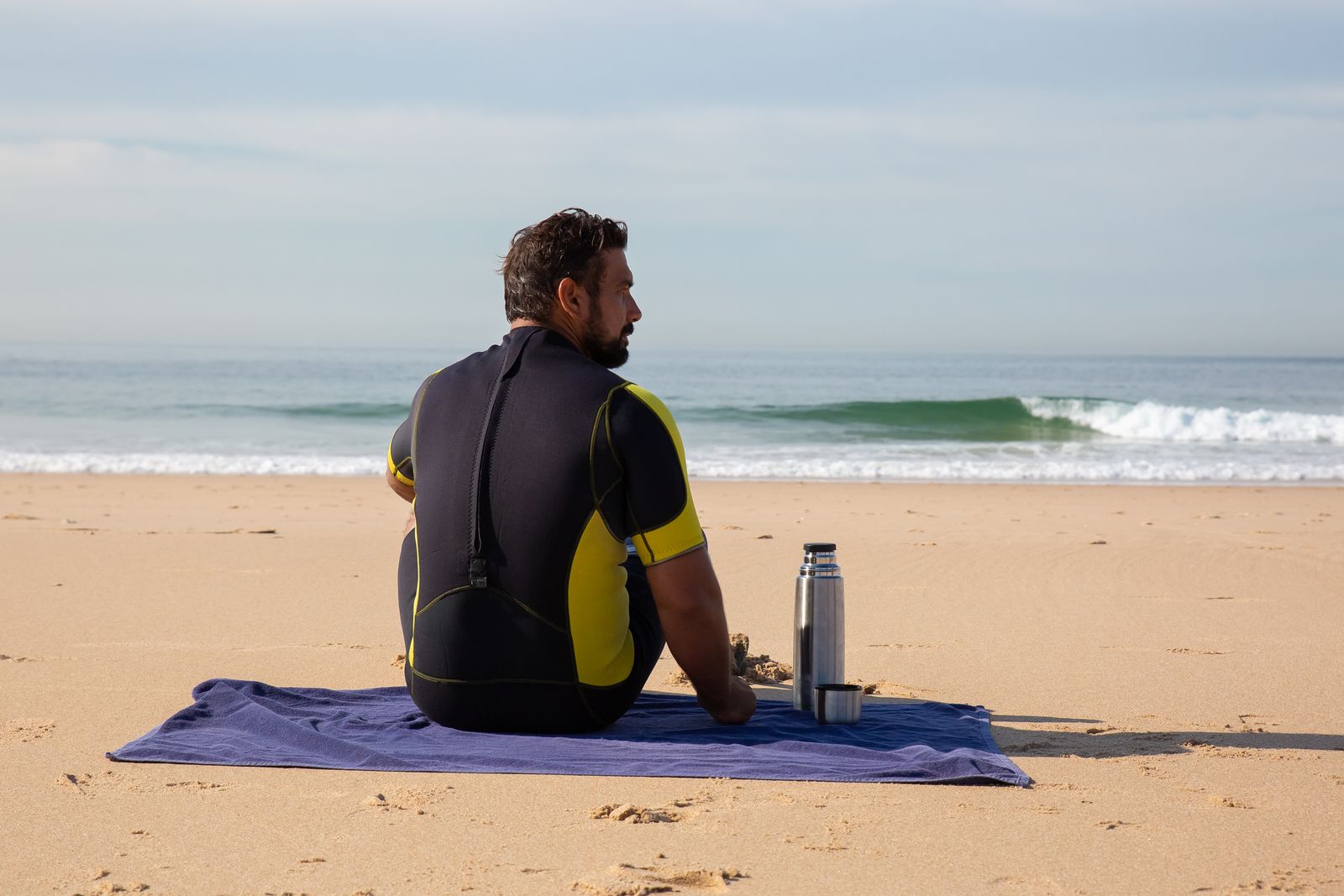
Afterdrop is the continued fall in your core temperature for around 10-30 minutes after you leave cold water, partly because your chilled outer tissue keeps drawing heat from your core and partly as blood returns to cold limbs, and it is why winter swimmers often feel coldest on the bank. The Outdoor Swimming Society warns that you are likely to feel colder ten minutes after you get out than you did in the water. The twenty minutes after a winter swim are part of the swim, and the order below matters:
- Get out early, while your fingers still work. Everything below depends on hands that can still operate a zip.
- Robe on for shelter, standing on a mat rather than frozen ground, and dry off quickly under it.
- Dress from the top down: warm hat first, then upper layers, then legs and feet. Nothing with fiddly buttons.
- Have a warm, sweet, non-alcoholic drink from a pre-filled flask, and walk gently rather than standing still.
- Hand warmers into pockets or gloves once your hands are dry, not before.
- Leave the hot shower or bath until you have stopped shivering and warmed through gradually; rapid surface rewarming can deepen afterdrop and leave you light-headed.
- Do not drive until you are warm, steady and thinking clearly.
Shivering after you are dressed is normal. A partner who is confused, drowsy, or not shivering while plainly cold is an emergency: call 999.
How do you stay safe swimming in the dark in winter?
The safest way to swim in winter darkness is not to: swim in daylight, and if dawn or dusk is your only slot, treat the dark as a hazard that shortens the dip. Around the shortest day much of the UK gets roughly eight hours of daylight or less, shrinking further north.
- Never swim alone. The RNLI and the Outdoor Swimming Society both advise against solo cold-water swimming; in the dark your partner should be watching, not swimming out of sight.
- Tell someone where you are going and when you will be back.
- Swim parallel to the shore and know your exit before you get in.
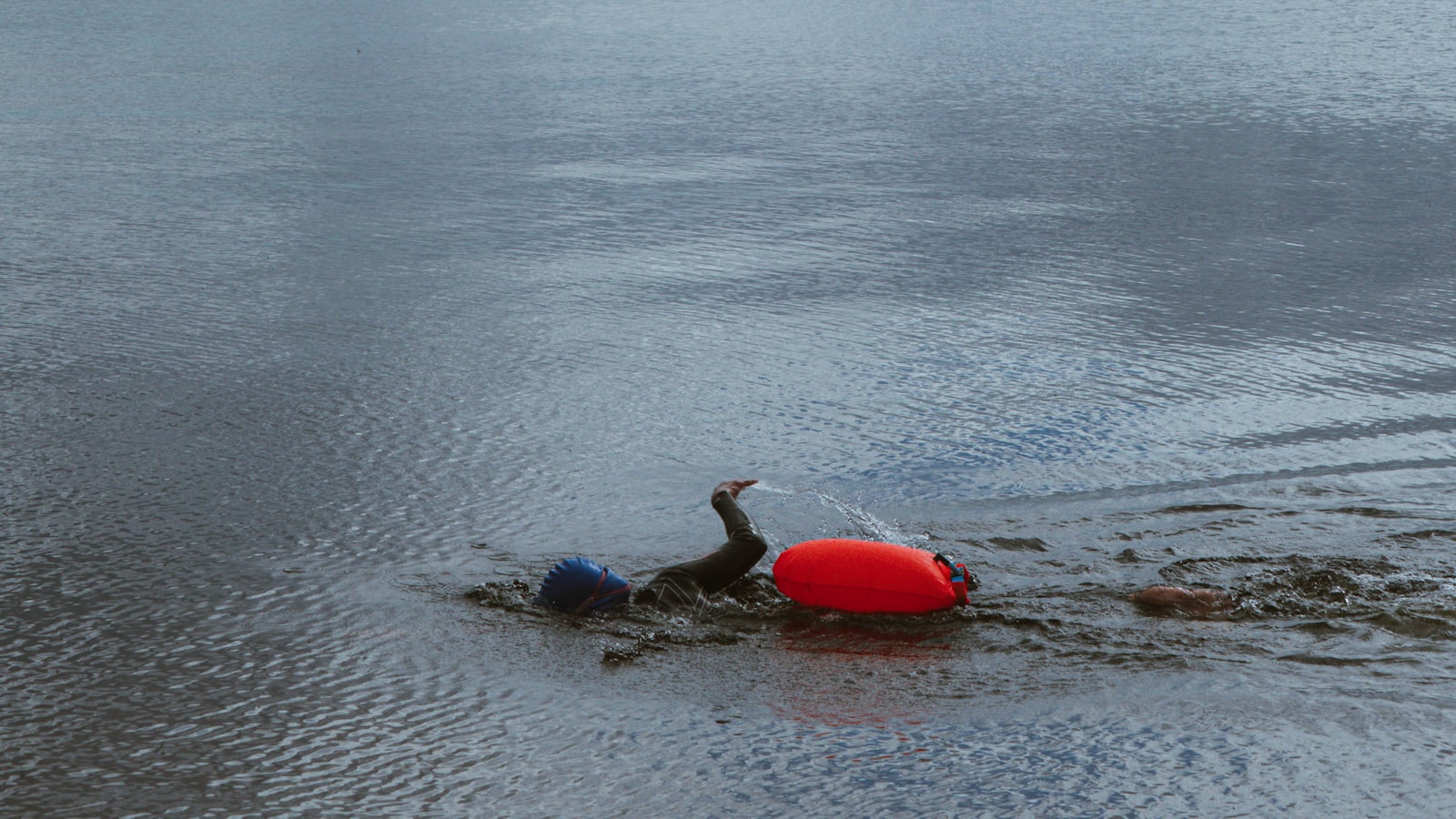
- Be seen: a bright cap, a tow float and a headtorch put the light on you and your kit. A headtorch does not light the water and is not a substitute for a lifeguard.
- Assume no lifeguards. RNLI patrols are seasonal on most beaches, so treat a winter beach as unpatrolled unless the RNLI says otherwise, and check tide times.
- Stay off ice: never swim under or beside it, or break it to get in outside an organised ice-swimming group.
If someone else is in trouble, do not go in after them: call 999, ask for the Coastguard at the coast, shout "float on your back" and throw something that floats.
When should you not swim in winter?
Most winter swimming risk sits in the decision to swim on the wrong morning. Go for breakfast instead when:
- The sea is loud. The RNLI's standing advice in stormy weather is to stay well back from the water, swimmers included. Our sea swimming for beginners guide covers reading conditions.
- You feel off. Hungover, short of sleep, coming down with something: cold water amplifies all of it. Never swim after alcohol, and give yourself permission to sit a swim out.
- Nobody else came. If you are the only one in the car park, you are not swimming alone; you are going home.
Is winter water quality worse for swimming?
Winter water quality is often worse after wet weather, because sewage storm overflows spill into rivers and the sea when rain overwhelms the system, and wet winter weather means they spill more often and for longer. That makes the water-quality layer on our map more important in winter, not less: check it before every swim, not just in summer.
One honest caveat: the Environment Agency's official bathing season in England runs from 15 May to 30 September, and the Excellent, Good, Sufficient and Poor classifications are based on samples taken during it. Outside those dates a bathing water's rating is the last official classification, not a live reading.
So in winter, treat the rating as a track record and add your own checks: avoid swimming for a day or two after heavy rain and check your water company's live storm-overflow map where one exists. Our UK water quality guide explains the ratings.
Who should talk to a GP before winter swimming?
Anyone with a heart condition, high blood pressure, asthma or Raynaud's, and anyone who is pregnant, should talk to their GP before winter swimming, because cold water shock puts a sudden load on the heart, circulation and breathing.
Many swimmers report better mood and sleep, and that is a perfectly good reason to swim, but the research on immune, inflammation and mental-health effects is still developing and this page makes no medical claims.
Is ice swimming the same as winter swimming?
No, ice swimming is a separate competitive discipline with its own governing body, the International Ice Swimming Association, and its events run under medical screening that a casual dip does not have. Long-distance winter swimming is likewise a discipline of its own; enter either through an established club, never by adding minutes to your own swim.
What kit do you need for winter swimming?
For a short winter dip you need warm extremities in the water and a fast, dry exit. The full moment-by-moment breakdown, with thicknesses and trade-offs, is in our winter swimming kit guide; this is the short version.
| Item | Which stage it addresses |
|---|---|
| 5mm neoprene gloves | Slows the loss of hand function behind claw hand and swim failure. Noticeably warmer than a 3mm pair once the water is in single figures. |
| 5mm zipped neoprene boots | Real boots, not thin socks. Feet cool as fast as hands, and numb feet make a frozen, slippery exit dangerous. |
| Neoprene swim cap | Warmer than a silicone cap alone; worn under or instead of it. |
| Tow float | Visibility in flat winter light and something to rest on. Not a lifejacket. |
| Floating thermometer | Know the number and log it, so you can shorten swims as it falls. |
| Waterproof changing robe | Shelter while you dry and dress; the first line against afterdrop. The Dryrobe Advance is the benchmark and our changing robes guide covers cheaper waterproof alternatives. |
| Insulated flask | Warm, sweet drink for the rewarming stage, filled before you leave home. For after, never during. |
| Hand warmers | In pockets or gloves once you are dry; they warm fingers, not cores, so the layers still do the real work. |
| Head torch | Dawn and dusk swims in December. Lights you and your kit; not a substitute for lifeguards. |
Add a warm hat, dry layers and thick socks, and test everything on a mild day first; a stiff robe zip is not something to discover with claw hand in the dark.
Where should you swim in winter?
Somewhere you already know, with a gentle exit, shelter to change in and other people around, or a lifeguarded venue or group session that runs through the cold months; winter hours change and some venues close, so check before you travel. Find a spot near you on our free UK map, check the official water-quality rating where there is one, then start small and get out early.
This guide is general safety information, not medical advice. In an emergency call 999 (or 112) and ask for the Coastguard at the coast. For the survival technique itself, see the RNLI's Float to Live page.
Frequently asked questions
Is winter swimming in the UK safe?
For most healthy adults it can be done with manageable risk, but it is never risk-free. The lower-risk version means acclimatising through autumn rather than starting cold in January, never swimming alone, keeping dips to a few minutes and getting out while you still feel good. Cold water shock, afterdrop and hypothermia are real, so talk to your GP first if you have a heart condition, high blood pressure, asthma or Raynaud's, or are pregnant.
How do you start winter swimming as a beginner?
The Outdoor Swimming Society and experienced winter swimmers agree that the best way is to keep swimming from late summer, at least weekly, and let the water cool around you a degree or two at a time. If you have missed autumn, do not start with a plunge; begin with short waist-deep wades on calm days with a group or at an organised, lifeguarded session, and treat your first winter as acclimatisation for the next.
How long can you stay in cold water in winter?
Minutes, not lengths. The only reliable rule is to get out while you still feel good and before you stop shivering; claw hand, clumsy fingers, slurred speech or a slowing stroke mean you have already stayed too long. The one-minute-per-degree idea is a folk rule of thumb, not a safety limit, and many experienced winter swimmers treat it as a generous upper bound rather than a target.
What temperature is too cold to swim in the UK?
There is no official minimum safe temperature. As a rough guide, tolerance shortens noticeably below about 15C, below about 10C you are winter swimming and thinking in minutes, and water near freezing is the territory of experienced, acclimatised swimmers doing very short, closely watched dips. UK sea temperatures typically bottom out somewhere around 6-9C in February and March, and inland water runs colder.
What is afterdrop and how do you avoid it?
Afterdrop is the fall in core temperature that continues for ten to thirty minutes after you leave cold water, partly as your chilled outer tissue keeps drawing heat from your core. You cannot avoid it entirely in cold water, but you can manage it: get out early, put a robe and hat on immediately, dress from the top down, have a warm non-alcoholic drink, walk gently, and leave the hot shower until you have warmed through.
Do you need a wetsuit for winter swimming?
Not for a short dip. Many UK winter swimmers swim in skins, meaning a normal costume with neoprene gloves, boots and a warm cap, because the swim is over before a wetsuit would make much difference. A swim-specific wetsuit is the sensible choice if you want to stay in longer or swim distance, but neither a wetsuit nor a tow float is a lifejacket.
Is the water quality worse for wild swimming in winter?
Often, after wet weather, because sewage storm overflows spill more when heavy rain overwhelms the system. The Environment Agency's official bathing season in England runs from 15 May to 30 September, so outside those dates a bathing water's rating is the last official classification rather than a live reading. In winter, treat the rating as a track record, avoid swimming for a day or two after heavy rain, and check your water company's live storm-overflow map where one exists.