Is Wild Swimming Legal in the UK? Access Rights Explained
The short answer: Wild swimming itself is not a criminal offence anywhere in the UK, but your rights depend on where you are. In Scotland, the Land Reform (Scotland) Act 2003 gives a statutory right of responsible access that expressly includes inland water, so you can swim in most lochs and rivers. In England and Wales there is no general right to swim inland: most riverbeds and banks are privately owned, and swimming without permission is a civil trespass, not a crime. The sea is, in practice, free to swim; reservoirs and canals are usually prohibited by byelaws — and breaching a byelaw, unlike simple trespass, is an offence.
UK "swimming law" is really three overlapping systems: the old law of land ownership and trespass in England and Wales, a modern statutory access right in Scotland, and a patchwork of local byelaws sitting on top of both. This guide sets out each in turn, names the statutes, and explains what actually happens if you swim somewhere you should not. It is general information, not legal advice — for a specific dispute, speak to a solicitor.
A rule of thumb worth memorising before the detail: the sea is simple, rivers are complicated, and Scotland is generous. Everything below unpacks those three ideas.
Is wild swimming legal in the UK? At a glance
| Where | Legal position | Key law |
|---|---|---|
| UK overall | Swimming itself is not a crime; the questions are whether you have a right to be in that water, and whether a local byelaw (an offence to breach) applies | See rows below |
| Rivers & lakes, England & Wales | No general public right to swim; unauthorised swimming is civil trespass against the owner of the bed or bank | Common law of trespass |
| The sea & tidal waters | Free to swim in practice; no permission needed once in tidal water, subject to local byelaws (harbours, ports) | Common law; local byelaws |
| Open access land, England & Wales | Right to roam on foot does NOT include swimming; bathing in non-tidal water is a restricted activity | Countryside and Rights of Way Act 2000, Schedule 2 |
| Reservoirs | Almost always prohibited by water company byelaws, and genuinely dangerous | Water Industry Act 1991, s.157 byelaws |
| Canals | Swimming prohibited by longstanding canal byelaws enforced by the Canal & River Trust | General Canal Byelaws 1965 |
| Scotland (lochs & rivers) | Statutory right of responsible access including inland water; swim most lochs and rivers without asking | Land Reform (Scotland) Act 2003; Scottish Outdoor Access Code |
Is wild swimming legal in England and Wales?
In England and Wales there is no general public right to swim in non-tidal rivers, lakes or ponds. Every stretch of riverbed, lakebed and bank belongs to someone — a private landowner, a farmer, an angling club, a water company, the National Trust or a local authority — and entering that land or water without permission is, in law, a trespass.
Three points about trespass that swimmers routinely get wrong:
- Trespass is a civil wrong, not a crime. Simple trespass is a private-law matter between you and the landowner. The police have no general role, and the famous sign — "Trespassers will be prosecuted" — has long been described by lawyers as a wooden lie.
- The landowner's remedy is limited. They can ask you to leave (and you should), and in principle sue — but with no damage done, any award would normally be nominal. Deliberately disrupting a lawful activity such as an angling match is different: that can be aggravated trespass, a criminal offence under section 68 of the Criminal Justice and Public Order Act 1994.
- The riverbed matters, not just the bank. Riverbed ownership usually runs to the middle of the channel from each bank, so even entering from a public footpath, swimming over a privately owned bed without permission is still, strictly, a trespass.
Campaigners argue that historic legislation created wider public rights on many rivers, and a handful do carry statutory navigation rights — the non-tidal Thames above Teddington is protected for public navigation under the Thames Preservation Act 1885, for example. But whether a right to navigate includes a right to swim has never been clearly settled by the courts, and the orthodox position remains that inland swimming in England and Wales rests on permission, tolerance or long custom rather than right. The direction of travel favours swimmers, though: in December 2020 a stretch of the River Wharfe at Ilkley became England's first designated river bathing water — a water-quality status that obliges the Environment Agency to monitor it in season, not an access right, but a sign of momentum.
Quotable fact
In England and Wales, swimming in a river or lake without the landowner's permission is a civil trespass, not a criminal offence. The police are not normally involved, but the landowner is entitled to ask you to leave, and you should do so calmly and promptly.
Can you swim in the sea? Tidal waters and the coast
Yes. Sea swimming is lawful around the whole UK coast, and no landowner's permission is needed once you are in tidal water — the sea, estuaries, and rivers up to their tidal limit. Swimming from Britain's beaches has been freely practised and universally tolerated for centuries.
For completeness — the kind of detail a lawyer would flag — in the 1821 case of Blundell v Catterall the courts held there was no strict common-law right to bathe in the sea or to cross a private foreshore to reach it. In practice this matters almost never: around half the UK foreshore belongs to the Crown Estate, access to popular beaches is secured by ownership, custom or agreement, and no one is realistically challenged for swimming in the sea.
What does restrict sea swimming is local regulation. Harbour authorities commonly ban swimming in working harbours, docks and shipping channels under their own byelaws, and district councils can make byelaws regulating public bathing under section 231 of the Public Health Act 1936 — the legal basis for the "no bathing" zones and marker buoys at busy resorts. Watch for signage, and treat any harbour mouth or ferry route as off limits regardless: propellers do not read statutes.

Legality is only half the question at the coast: tides, rips and cold water are the bigger risks. Read our guides to sea swimming for beginners and cold water swimming safety, and follow RNLI advice (rnli.org/safety), including Float to Live if you get into trouble.
Does the right to roam include swimming? CRoW 2000 explained
No — and this surprises many walkers. The Countryside and Rights of Way Act 2000 (CRoW) created a right of access on foot to mapped open country — mountain, moor, heath and down — and registered common land in England and Wales. But the right is deliberately narrow: Schedule 2 to the Act lists what it does not cover, and bathing in any non-tidal water is expressly among the excluded activities.
So on CRoW open access land you may walk to the shore of a mountain tarn quite lawfully, yet have no statutory right to get in. Swimming in remote upland tarns and pools is often tolerated, and some major landowners take a permissive approach — but tolerance is not a right, and it can be withdrawn. Where a landowner such as the National Trust or a national park authority publishes its own position on swimming, check that guidance before you travel.
Quotable fact
The English and Welsh "right to roam" under the Countryside and Rights of Way Act 2000 is a right of access on foot only. Schedule 2 of the Act expressly excludes bathing in non-tidal waters, so it confers no right to swim in lakes, tarns or rivers on open access land.
Why is swimming banned in reservoirs?
Reservoirs are the clearest "no" in UK swimming law. Water companies have statutory power under section 157 of the Water Industry Act 1991 to make byelaws regulating their waterways and land, and virtually all of them use it to prohibit swimming in their reservoirs. Breaching a byelaw is an offence punishable by a fine — unlike simple trespass, this is a matter where you genuinely can end up before a court.
The bans are not corporate over-caution. Reservoirs combine a specific set of hazards:
- Severe cold at depth. Even in a heatwave, the water a few metres down can be cold enough to trigger cold water shock and rapid swim failure.
- Sudden depth changes and steep engineered sides that make getting out hard.
- Operational machinery — towers, pumps and drawdown outlets that can create currents at depth.
A small number of reservoirs host supervised open-water sessions run with the operator's consent — the lawful route in; book through the official operator and check details before you travel. Otherwise, treat every reservoir as closed to swimmers, because in law it almost certainly is.
Canals, parks and urban waters: the byelaw patchwork
Even where trespass is not in play, local byelaws often are. Three common examples:
- Canals. Swimming in canals is prohibited under the General Canal Byelaws 1965, still enforced by the Canal & River Trust. Canals are also grim places to swim: locks, boat traffic, poor water quality and submerged debris.
- Royal Parks. In London's Royal Parks, bathing is prohibited except at designated places under the Royal Parks and Other Open Spaces Regulations 1997 — which is why the Serpentine Lido in Hyde Park is a designated, managed exception rather than a free-for-all.
- Local authority waters. Councils regulate bathing in park lakes, boating ponds and some urban rivers via byelaws, typically made under section 231 of the Public Health Act 1936. Look for posted byelaw notices at the water's edge.
If you are searching for lawful swims around the capital, our guide to wild swimming near London covers the managed venues — lifeguarded ponds and booked open-water sessions — where the legal question simply does not arise.
Is wild swimming legal in Scotland?
Scotland is a different legal world, and much the friendlier one for swimmers. Part 1 of the Land Reform (Scotland) Act 2003 gives everyone a statutory right of access to most land for recreation — and the Act's definition of "land" expressly includes inland waters, canals and the foreshore. Swimming falls within these access rights, so you can lawfully swim in most Scottish lochs and rivers without seeking anyone's permission.
The right comes with a condition: it must be exercised responsibly, as set out in the Scottish Outdoor Access Code, the Act's practical guide approved by the Scottish Parliament. For swimmers that means:
- Keeping clear of houses, gardens and their immediate surroundings, which are excluded from access rights
- Avoiding interference with anglers, boat users and farm operations
- Taking care around wildlife, especially birds nesting at the water's edge
- Leaving no trace — parking considerately and taking litter home
Access rights do not override everything: local byelaws can still restrict specific waters, and Scottish Water discourages swimming in its drinking-water reservoirs. But the default is the reverse of England's — in Scotland the water is open unless something specific closes it.
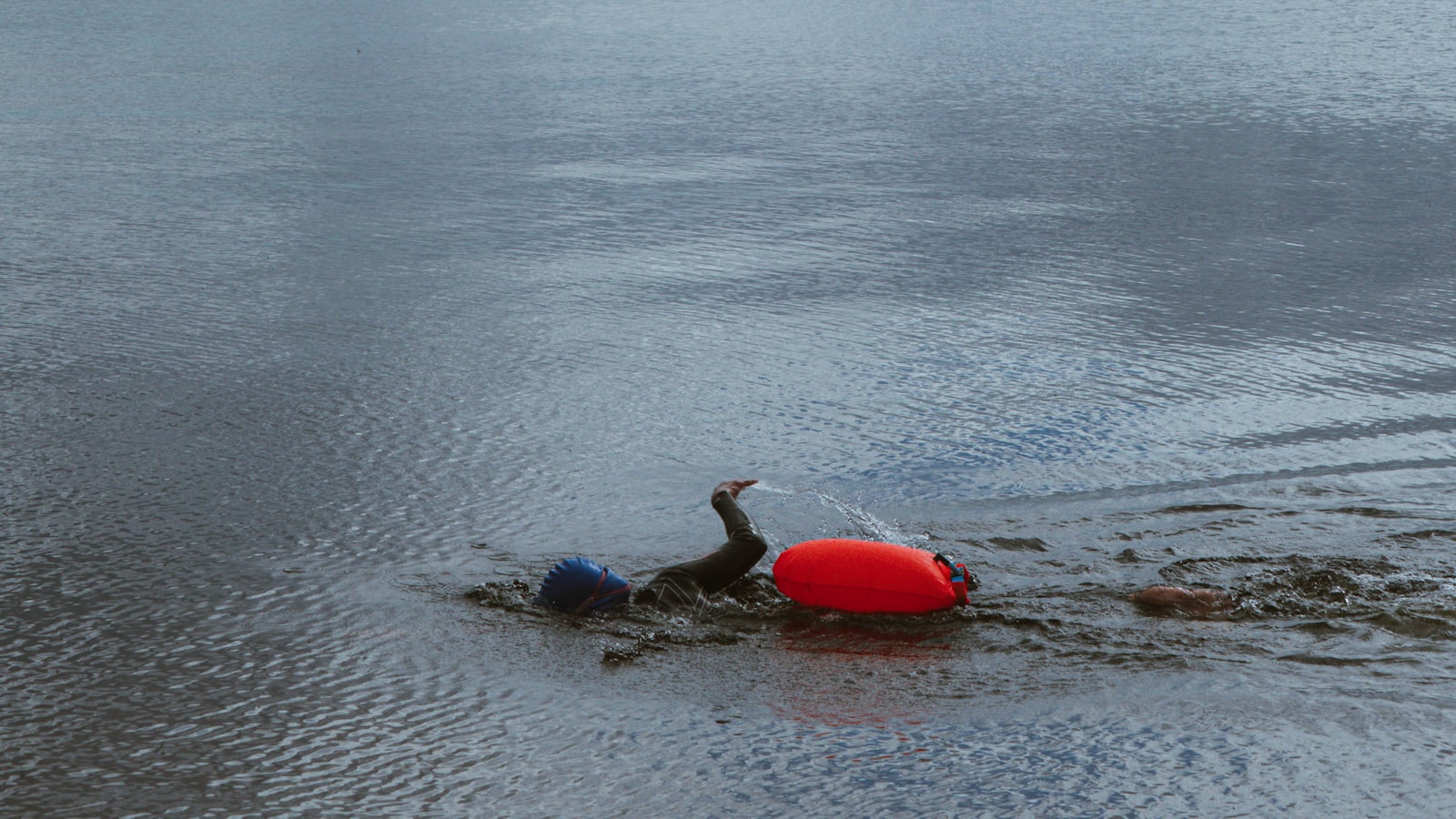
Quotable fact
Under the Land Reform (Scotland) Act 2003, "land" includes inland waters, so Scotland's statutory access rights cover swimming in most lochs and rivers — provided the right is exercised responsibly under the Scottish Outdoor Access Code. No equivalent right exists in England, Wales or Northern Ireland.
A legal right is not a safety guarantee: deep lochs are cold enough to incapacitate a swimmer even in August, and shelving can be sudden. Pair this guide with our pick of the best wild swimming spots in Scotland.
Is wild swimming legal in Northern Ireland?
Northern Ireland has no equivalent of Scotland's access legislation, so the position broadly mirrors England and Wales: no general right of access to inland water, which means swimming in loughs and rivers rests on the landowner's permission or established use, while the sea and tidal waters remain open to all in practice. Lean on known, established spots and check locally before you travel.
What happens if you swim somewhere you shouldn't?
Three realistic scenarios in England and Wales:
| Scenario | Legal character | Realistic consequence |
|---|---|---|
| Swimming in a private river or lake without permission | Civil trespass | Being asked to leave; damages only if you cause actual harm; no police involvement for the swim itself |
| Swimming in breach of a byelaw (reservoir, canal, harbour, park) | Criminal offence under the byelaw | Possible fine on prosecution; enforcement varies but is real, especially at reservoirs |
| Refusing to leave, causing damage, or disrupting lawful activity | Injunction, or aggravated trespass (Criminal Justice and Public Order Act 1994, s.68) | Court action becomes possible — this is where real legal trouble starts |
The rule that keeps almost every swimmer out of every dispute: if someone with apparent authority asks you to leave, get out, be polite, and go. The law offers you nothing if you stay.
How to wild swim legally (and without conflict)
- Use known, established spots. Managed venues, long-standing swim spots and designated bathing waters carry little or no legal risk. Find a spot near you on our free UK map.
- Prefer designated bathing waters. Designation under the Bathing Water Regulations 2013 means the Environment Agency (SEPA in Scotland, Natural Resources Wales in Wales) monitors water quality in season — though it is a water-quality status, not an access right. More in our UK water quality guide.
- Ask. Landowners, angling clubs and farmers say yes more often than you might expect, especially to small groups who leave no trace.
- Read the signs. Byelaw notices are the one kind of "no swimming" sign with criminal force — reservoirs, canals, harbours and parks especially.
- Be visible in shared water. A bright tow float makes you obvious to anglers and boat users, reducing conflict as well as risk — though it is a visibility aid, not a lifejacket, and will not prevent drowning.
- In Scotland, follow the Code. The access right survives because people use it responsibly.
Legality is not safety
A legal right to swim tells you nothing about cold water shock, currents or depth. Wherever you swim, the safety rules are the same: acclimatise, stay close to shore, never swim alone, and know Float to Live. Start with our cold water swimming safety guide.
This article is general information, not legal advice. Laws, byelaws and access arrangements change and vary water by water — for a specific access question, consult a solicitor; for safety advice, see the RNLI (rnli.org/safety) and the Outdoor Swimming Society (outdoorswimmingsociety.com).
Frequently asked questions
Is wild swimming illegal in England?
No. Swimming itself is not a criminal offence in England. However, there is no general right to swim in non-tidal rivers and lakes, so swimming without the landowner's permission is a civil trespass — a private matter, not a police one. Byelaws at reservoirs, canals, harbours and some parks are the exception: breaching those is an offence that can be prosecuted.
Can you legally swim in any river in the UK?
In Scotland, broadly yes: the Land Reform (Scotland) Act 2003 gives a right of responsible access to most inland water. In England and Wales there is no general right — riverbeds and banks are mostly privately owned, so lawful swimming depends on permission, an established tolerated spot, or tidal water.
Why is swimming not allowed in reservoirs?
Water companies prohibit swimming through byelaws made under section 157 of the Water Industry Act 1991, and breaching them can mean a fine. The bans reflect real hazards: dangerous cold at depth all year, steep engineered sides, sudden depth changes and operational machinery. Some reservoirs host supervised swim sessions with the operator's consent — the lawful way in.
Does the right to roam let you swim in lakes?
No. The Countryside and Rights of Way Act 2000 gives a right of access on foot to mapped open country and registered common land in England and Wales, but Schedule 2 of the Act expressly excludes bathing in non-tidal water. Swimming in tarns and lakes on access land is sometimes tolerated by landowners, but tolerance is not a legal right.
Is it legal to swim in the sea anywhere in the UK?
In practice, yes — sea swimming is lawful around the UK coast and needs no one's permission. Local byelaws are the real constraint: harbour authorities ban swimming in working harbours and shipping channels, and councils can regulate bathing under section 231 of the Public Health Act 1936. Check signage, and never swim in a harbour mouth or ferry route.
Do you need permission to swim in a loch in Scotland?
Generally no. Scotland's Land Reform (Scotland) Act 2003 defines "land" to include inland waters, so responsible swimming in most lochs and rivers is covered by statutory access rights under the Scottish Outdoor Access Code. Exceptions include water near houses and gardens, places restricted by local byelaws, and drinking-water reservoirs where Scottish Water discourages swimming.
What happens if you get caught wild swimming on private land?
For simple trespass, realistically very little: the landowner can ask you to leave, and damages would normally be nominal unless you caused actual harm. It only escalates if you refuse to leave, cause damage, deliberately disrupt a lawful activity such as angling (aggravated trespass under section 68 of the Criminal Justice and Public Order Act 1994), or breach a byelaw. Leave calmly when asked and the matter ends there.